
When people think about dental implants, they picture the metal post — the little titanium screw that replaces a missing tooth's root. They assume the skill is only in placing it.
But ask any experienced implant dentist where a case is really won or lost, and most will tell you the same thing: it's won before the procedure ever starts. It's won in the planning. And the tool that makes good planning possible is a 3D scan called a cone beam CT.
Here's what that scan actually shows us, and why we'd never want to place an implant without it.
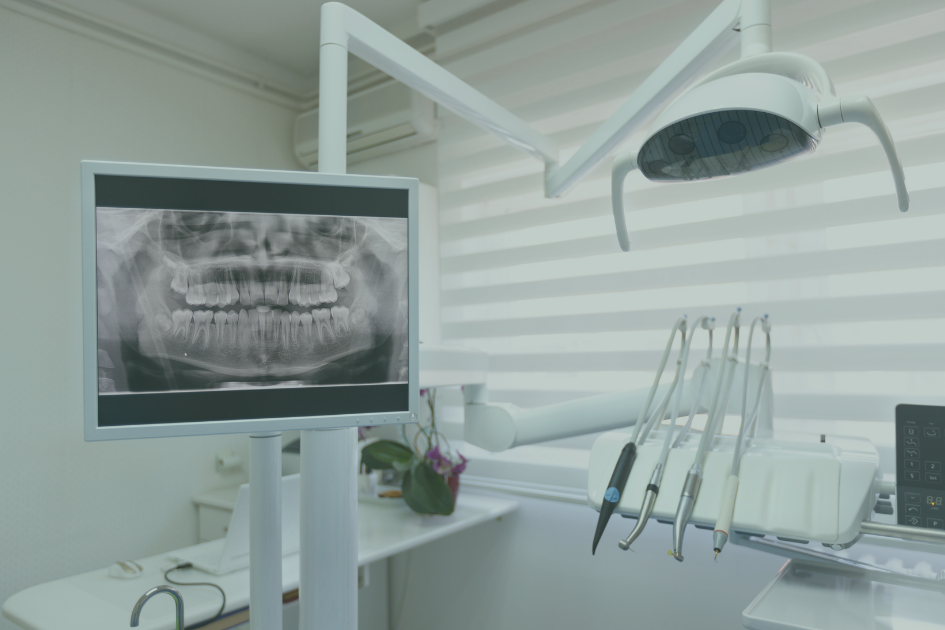
A regular X-ray is a flat photo. This is a full map.
A standard dental X-ray is flat — a two-dimensional picture of something that's actually three-dimensional. It's useful, but it hides a lot. Imagine trying to park a car using only a photo taken from straight ahead. You can't see depth. You can't tell what's behind anything.
A cone beam CT scan is different. In one quick, low-dose scan, it builds a full 3D model of your jaw. We can rotate it, slice through it, and look at your bone, your nerves, and your sinuses from every angle. That changes everything about how safely and accurately we can plan.
Hidden thing #1: Is there enough bone — and is it strong enough?
An implant needs solid bone to anchor into. Two things matter: how much bone there is, and how dense it is.
When you lose a tooth, the bone underneath slowly shrinks over time, because it's no longer being used. So years after a tooth is gone, there may not be enough bone left to hold an implant the normal way. The 3D scan measures this precisely. If the bone is too short or too thin, we know in advance — and we can plan a solution, like building bone up first, instead of getting a nasty surprise mid-procedure.
The scan also shows bone density. Some areas of the jaw are naturally denser than others, and density affects how the implant will hold and heal.
Hidden thing #2: Exactly where the nerve runs
This is the big one — the reason guessing is genuinely dangerous.
In your lower jaw, there's a nerve that runs through the bone and gives feeling to your lip and chin. On a flat X-ray, you can sort of see roughly where it is. "Roughly" is not good enough. If an implant is placed too deep or in the wrong spot and touches or damages that nerve, it can cause numbness or tingling in the lip and chin that may not go away.
A cone beam CT shows us exactly where that nerve canal travels, in three dimensions. We can measure the precise distance and plan the implant to stay a safe margin away. This single piece of information is one of the strongest arguments for 3D planning, and it's why we treat it as essential, not optional.
Hidden thing #3: The sinus sitting right above your upper back teeth
In your upper jaw, toward the back, your sinuses sit just above where the tooth roots are. The floor of the sinus can be very close to where an implant needs to go — and sometimes there isn't much bone between them.
This is one of the trickier areas in the whole mouth for implants. The 3D scan shows us exactly how much room we have and how close the sinus is. If we need to add bone or take a different approach, we know it ahead of time and can plan around it calmly.
Why we plan the whole thing in software first
Once we have the 3D model, we can plan the entire implant on a computer before you're ever in the chair. We choose the right size, the right angle, and the exact depth, all measured against your real anatomy — your bone, your nerve, your sinus.
That's the part most people don't realize: by the time the actual procedure happens, much of the hard thinking is already done. The placement follows a plan that was built around your specific mouth. That's what makes a modern implant predictable instead of a guess.
So when we say "let's get a 3D scan first," we're not adding a step for the sake of it. The scan is the foundation of a safe result. Knowing exactly where to put the implant post is everything.
The bottom line
A dental implant can last for decades and feel like your own tooth — but only when it's planned with a clear, complete picture of what's actually inside your jaw. The 3D scan turns guesswork into measurement.
At Smiles of Gonzales, we use cone beam CT 3D imaging right here in our office to plan dental implants for patients across Gonzales , Seguin, Luling, Shiner, and the surrounding area — so you don't have to drive to a big city for that level of planning. If you're missing a tooth or thinking about implants and want to understand your options, call us at (830) 672-8664 to set up a consultation.