

Tooth pain has a way of starting small enough to ignore. A little sensitivity here, a dull ache there, and before long it has become something you have just learned to live around. But tooth pain is rarely a coincidence, and it rarely goes away on its own. If you have been pushing through discomfort and wondering how bad it really has to get before you do something about it, this is for you.
Why So Many People in Gonzales Push Through Tooth Pain
It Started Small So You Figured It Could Wait
Most dental problems do not announce themselves dramatically. They creep in gradually, which makes it easy to convince yourself that whatever is going on is probably not serious. A little twinge when you drink something cold. A mild ache after a meal. It does not feel urgent, so it gets pushed to the back of the list. The problem is that the conditions most commonly behind tooth pain, like cavities, infections, and gum disease, do not stabilize on their own. They progress. And the longer they go unaddressed, the more involved the treatment tends to be.
Life Gets Busy, and the Pain Becomes Background Noise
Between work, family, and everything else pulling at your attention, it is genuinely easy to let tooth pain fade into the background. People in Gonzales and across South Central Texas do this all the time, not because they do not care about their health, but because daily life does not stop to make room for a dental appointment . The pain gets normalized. You adjust how you chew, you avoid certain foods, and gradually the discomfort becomes just another thing you are managing. That adaptation can actually work against you, because by the time the pain becomes impossible to ignore, the underlying problem has often gotten significantly worse.
The Real Risk of Waiting It Out
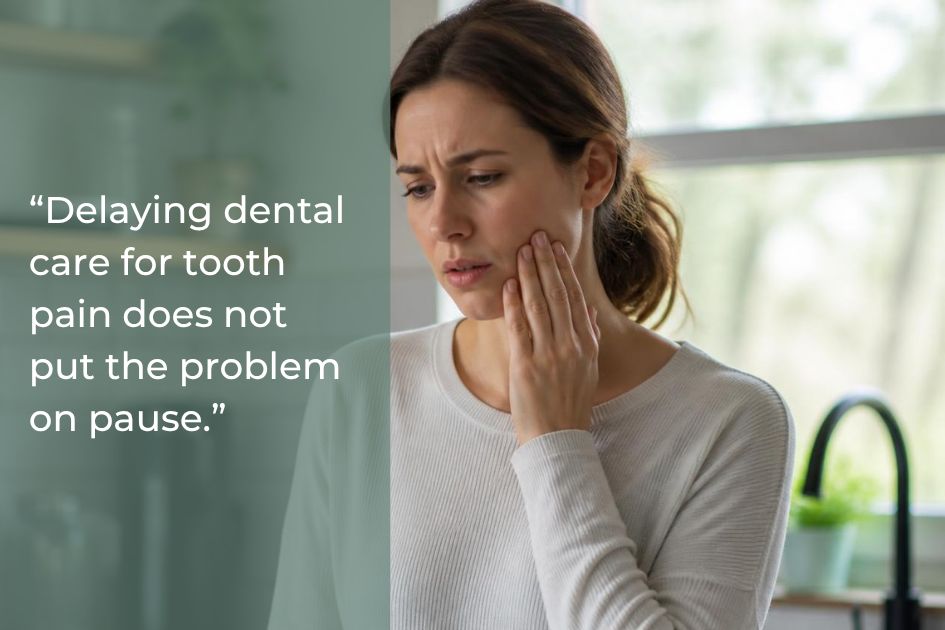
Delaying dental care for tooth pain does not put the problem on pause. In most cases, it gives the underlying issue more time to develop, which typically means more extensive treatment down the road. A cavity that could have been handled with a simple filling can become a situation that requires a crown or a root canal. An infection left alone can spread beyond the tooth into the surrounding tissue and jaw. The discomfort you are tolerating now is your body's way of flagging that something needs attention, and that signal is worth taking seriously.
The Most Common Causes of Tooth Pain
Cavities and Tooth Decay
Cavities are one of the most common sources of tooth pain, and they are more widespread than most people realize. Early tooth decay often shows up as sensitivity to sweets or temperature before it becomes outright painful. By the time a cavity is causing consistent discomfort, it has usually progressed past the earliest stage. Regular checkups catch decay before it reaches that point, but if pain is already present, it is time to get it looked at.
A Cracked or Fractured Tooth
A cracked tooth does not always come from an obvious injury. Chewing on hard foods, biting down unexpectedly on something solid, or years of grinding can all cause fractures that are not visible to the naked eye. The pain is often sharp and appears specifically when you bite in a certain direction. Cracks can worsen over time and eventually allow bacteria to reach the inner tooth, so catching them early matters.
Gum Disease and Gum Recession
Gum disease is one of the most underdiagnosed dental conditions, particularly in rural communities where regular preventive visits happen less frequently. As gums recede, the roots of teeth become exposed, which creates significant sensitivity and pain. Red or swollen gums, bleeding when brushing, persistent bad breath, and discomfort while chewing are all signs worth taking seriously. Left untreated, gum disease progresses and can contribute to tooth loss over time.
An Infected or Abscessed Tooth
An abscessed tooth occurs when bacteria reach the inner pulp of the tooth and an infection develops. The pain associated with an abscess is typically intense and throbbing, and it may be accompanied by swelling, fever, or a persistent bad taste in the mouth. This is one of the more serious causes of tooth pain because the infection can spread if it is not treated promptly. An abscess is not something to wait out.
Grinding Your Teeth Without Knowing It
Many people who grind their teeth do it during sleep and have no idea it is happening. Bruxism, as it is clinically called, puts significant pressure on the teeth and jaw over time, causing soreness, sensitivity, and worn enamel. Stress is one of the most common triggers, and it is not unusual for patients to notice more jaw pain and tooth sensitivity during particularly demanding periods of life. A custom night guard can protect the teeth and significantly reduce symptoms.
A Damaged or Lost Filling or Crown
Fillings and crowns do not last forever. When one becomes damaged, loosened, or falls out entirely, the tooth underneath loses its protection and becomes vulnerable to sensitivity, decay, and pain. If a restoration feels different when you bite, or you notice discomfort in a tooth that previously felt fine, it is worth getting it checked before the situation progresses.
How to Tell What Kind of Pain You Are Dealing With
Sharp Pain When You Bite Down
Pain that appears specifically when you apply pressure is often associated with a cracked tooth, a failing restoration, or an abscess affecting the tissues around the root. The location and consistency of the pain can help your dentist identify the cause quickly.
Sensitivity to Hot or Cold That Lingers
Brief sensitivity to temperature is fairly common and not always a cause for alarm. But when that sensitivity lingers for more than a few seconds after the temperature source is removed, it can indicate that the nerve inside the tooth is affected. This type of pain often points to a deeper cavity, a crack, or early pulp damage that warrants evaluation.
Throbbing Pain That Does Not Go Away
Persistent throbbing pain that has no clear trigger and does not resolve on its own is often a sign of infection or significant nerve involvement. This kind of pain tends to worsen over time rather than settle, and it typically means the situation has moved beyond a minor fix. How long the pain has been present, how intense it is, and whether it is spreading are all details your dentist will want to know.
Swelling Around the Tooth or Jaw
Swelling alongside tooth pain is a red flag. It often indicates that an infection has moved into the surrounding tissue, which can escalate quickly. If you notice visible swelling in your gums, cheek, or jaw, especially when combined with a fever or difficulty swallowing, that is a dental emergency that should not wait.
Pain That Comes and Goes vs. Pain That Is Getting Worse
Intermittent discomfort that seems to come and go can sometimes indicate early-stage issues or sensitivity that responds to certain triggers. But pain that is steadily worsening over days or weeks is a different matter entirely. A pattern of escalation almost always means the underlying condition is progressing, and the sooner it is addressed, the better the outcome tends to be.
When Tooth Pain Is a Dental Emergency
Signs You Should Not Wait Until Monday
Some situations genuinely cannot wait for a regular appointment . If you are experiencing any of the following, contact a dentist as soon as possible rather than waiting it out over the weekend:
Severe pain that is not responding to over-the-counter relief, visible swelling in the gums or face, a tooth that has been knocked out or broken, a persistent fever alongside dental pain, or a bad taste in the mouth that suggests an active infection. These are signs that something more serious is happening and that prompt care can make a real difference in the outcome.
What Happens If an Abscess Goes Untreated
A dental abscess is an active bacterial infection, and like any infection left without treatment, it can spread. The bacteria can move from the tooth into the jawbone, the neck, and in serious cases, the bloodstream. Sepsis, while not common, is a genuine risk when dental infections go ignored long enough. Beyond the health risk, an untreated abscess tends to cause escalating pain and eventually requires more complex treatment than it would have at an earlier stage. It is one of those situations where getting in quickly genuinely pays off.
How Smiles of Gonzales Handles Same-Day Dental Pain
At Smiles of Gonzales, same-day appointments are available for patients dealing with urgent tooth pain. The priority is to get you in, identify what is happening, and relieve your discomfort as quickly as possible. Patients from Gonzales, Seguin, Luling, and surrounding South Central Texas communities do not have to travel far or wait long to get emergency dental care from a team that actually knows them.
What to Expect When You Come In for Tooth Pain at Smiles of Gonzales

We Find the Source First Before Recommending Anything
Walking in with tooth pain does not mean walking out with a treatment you did not fully understand. The first step at Smiles of Gonzales is always a thorough evaluation, using digital X-rays and a detailed conversation about your symptoms, to find out exactly what is causing the discomfort before anything is recommended. The goal is accurate answers, not assumptions.
Treatment Options Depending on the Cause
Treatment is matched to the actual cause of the pain. A cavity may call for a filling or a crown. An infection may require a root canal or antibiotics. A cracked tooth has its own set of options depending on the severity. Gum-related pain is addressed differently than nerve-related pain. Every recommendation is explained clearly so that you understand what is happening with your tooth and why a particular approach makes sense for your situation.
How Our Team Makes the Visit Comfortable Even When You Are Already in Pain
Coming in while you are already hurting can feel daunting, and the team at Smiles of Gonzales understands that. Sedation options are available for patients who need them, the pace of the appointment moves at your comfort level, and the entire approach is built around making you feel supported rather than rushed. Being in pain when you walk in does not mean the visit itself has to be an unpleasant experience.
You Do Not Have to Just Live With It
Tooth pain is not just an inconvenience. It is a signal, and it is worth listening to. For patients throughout Gonzales, Seguin, Luling, and South Central Texas who have been managing discomfort and putting off the call, the team at Smiles of Gonzales is ready to help you get answers and find relief. The longer a dental problem sits, the more complicated it tends to become. Taking that first step sooner rather than later is almost always the right move, and you will not be judged for how long it has been or what has been going on in the meantime. Just reach out and let the team take it from there.